

Drip irrigation is one of the smartest ways to water crops, because it delivers water slowly to the root zone and wastes very little. That is why it is a favourite topic for school science exhibitions. But before you start building, you need a clear list of drip irrigation project components, so you do not get stuck halfway for a missing part. This guide explains each part in simple words, from pipes and pumps to sensors and Arduino, so your model works the first time.
Drip Irrigation Project Components Required for a Working Model
A working model has two sides: the water side, which moves the water, and the electronics side, which decides when to move it. The basic parts are:
- Water container: a bucket or small tank as the water source
- Mini DC pump: to push water through the tubes
- Main tube and 4 mm drip tubing: to carry water to the plants
- Drippers, connectors and end caps: to release water drop by drop
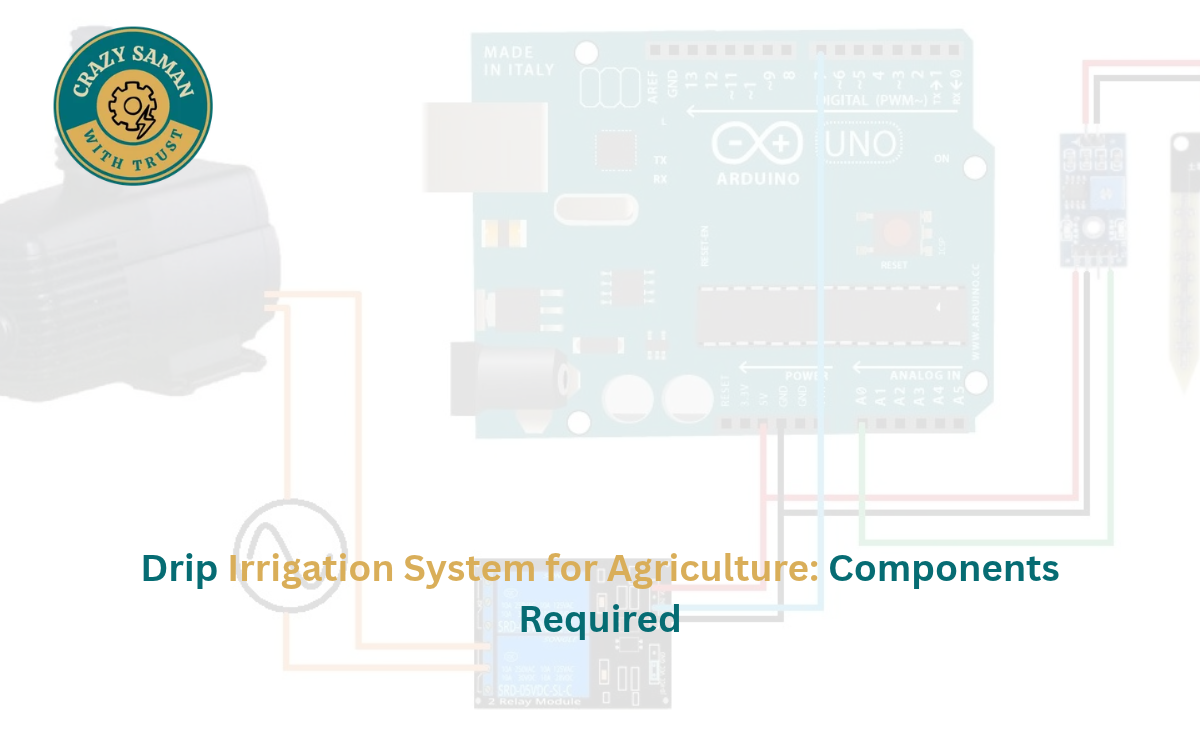
- Arduino board, soil moisture sensor and relay module: for automatic control
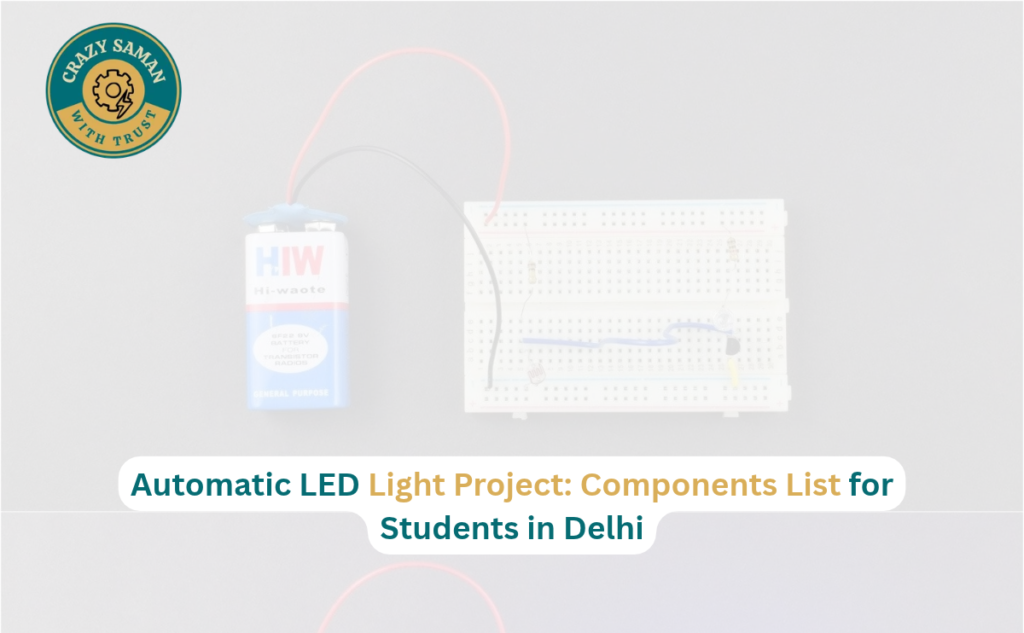
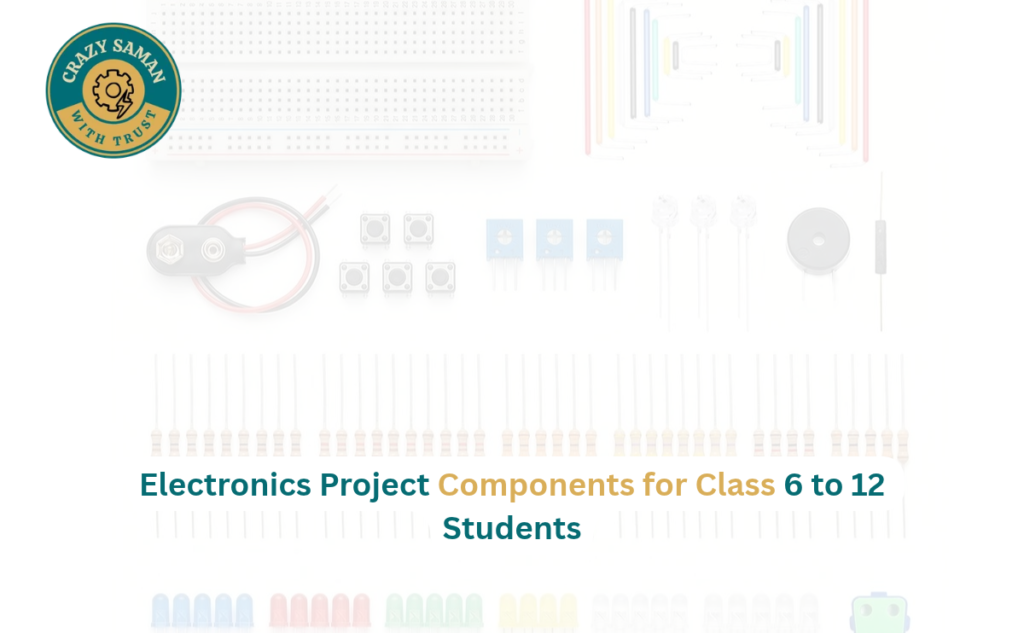
- Battery, adapter, Jumper wires and breadboard: for connections and power
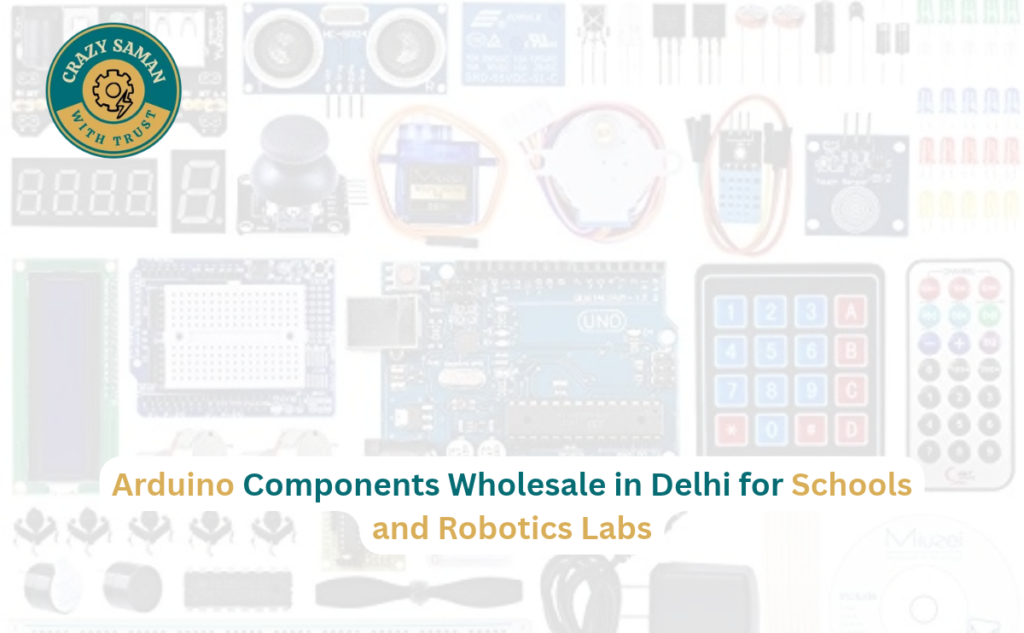
Gather all these drip irrigation project components on one table before you start assembling. A simple manual model needs only the water side. If you want a smart model, add the electronics.
Automatic Irrigation System Using Arduino
An automatic irrigation system using Arduino reads the soil moisture sensor and switches the pump on or off. The logic is simple: dry soil starts the pump, wet soil stops it. Both Arduino Uno and Arduino Nano work well. Uno is easy for beginners, while Nano suits compact models.
The Arduino cannot power a pump directly, so a relay module sits between them. Among all drip irrigation project components, the Arduino is the brain that ties everything together. Test your code first with the pump disconnected, and add a small delay so the pump does not switch on and off rapidly. A good automatic irrigation system using Arduino always protects the pump this way.
Soil Moisture Sensor for Irrigation Projects
A soil moisture sensor for irrigation measures how wet the soil is and sends that reading to the Arduino. Two types are common. The resistive type is cheap, but its metal probes corrode with time. The capacitive type lasts longer and gives steadier readings, so it is better if your model has to run for the whole exhibition.
Place the probe in the soil near the dripper, not directly under it. Note the reading in dry air and in a glass of water, then set your threshold between the two. This calibration step matters more than most students expect. Choosing the right soil moisture sensor for irrigation is one of the most important decisions among drip irrigation project components.
Water Pump for School Project and Drip Irrigation Model
The pump moves water from the container to the drip line. For a small model, a mini submersible DC pump (3V to 6V) is enough, while a 12V pump suits a bigger setup. The best water pump for school project use is one that matches your power source, so check the voltage before buying.
Keep the pump fully under water, because running it dry can damage it. Switch it through a relay or motor driver, and never connect it directly to an Arduino pin. Small pumps give low pressure, so use short tubing and a few drippers. Pick a water pump for school project builds that is compact and quiet, and you will avoid leaks and noise during the demo. Always include the pump when you list your drip irrigation project components.
Agriculture Working Model Components for Students
Teachers usually ask for a complete working model, not just a circuit. Agriculture working model components fall into four groups:
- Water system: tank, pump, tubing and drippers
- Control system: Arduino, relay module, jumper wires and breadboard
- Sensing: soil moisture sensor, and optionally a DHT11 for temperature and humidity
- Power and display: battery pack or adapter, LCD or LEDs, and a base board with a soil tray
Keeping agriculture working model components in these groups helps you check your list quickly and spot what is missing. Add a few small plants and label every part, and the judges will understand your drip irrigation project components in seconds.
Automatic Plant Watering Project Using a Soil Moisture Sensor
If you want a smaller version, an automatic plant watering project is a great starting point. It needs one pot, one sensor, an Arduino, a relay and a pump with a short tube. When the soil dries, the pump gives a measured amount of water and then waits.
This automatic plant watering project is also useful at home for balcony plants when you are away. Later, you can expand it to many plants with a drip line, using the same drip irrigation project components.
How Does a Drip Irrigation System Work?
On a real farm, water from a tank or borewell passes through a filter and a pressure regulator before entering the main line. It then flows into smaller lines and comes out drop by drop through emitters placed near each plant. This saves a lot of water compared with flood irrigation and keeps the leaves dry.
Your model copies the same idea on a small scale. The pump replaces the main supply, the 4 mm tube replaces the lateral line, and the drippers do the final watering. Understanding this makes it easier to explain your drip irrigation project components during the viva. Whatever size you build, the drip irrigation project components you choose should match the water flow your plants need.
Where to Find Drip Irrigation Project Components in Delhi?
Looking for the electronic side of your drip irrigation project components? CRAZY SAMAN offers a range of electronic products, including Arduino boards, sensors, jumper wires, breadboards, DC motors and electronic modules for school projects, science exhibitions, robotics and DIY experiments. Customers in nearby areas of Sultanpuri, Delhi can ask about local delivery through Porter, subject to availability and delivery charges. You can also call us in advance to confirm availability and arrange collection from our location.
We try to keep our prices competitive so students, parents and teachers can find suitable products within budget, and you are welcome to compare us with Amazon, Flipkart, Meesho and other platforms before buying. Browse our products at crazysaman.com, check the specifications, and contact CRAZY SAMAN to discuss your project needs, bulk orders, pricing and delivery. For items like tubing, drippers and the water tank, a local hardware or garden store is the best place to look.
Frequently Asked Questions About Drip Irrigation Project Components
What are the main drip irrigation project components?
A water container, pump, tubing, drippers and connectors, plus an Arduino, soil moisture sensor, relay module and power source if you want the model to work automatically.
Can I build the model without Arduino?
Yes. A manual model with a small valve works fine, but the drip irrigation project components for an automatic version need the Arduino and sensor.
Which pump is best for a school model?
A 3V to 6V mini submersible pump is enough for most models. Check that it suits your other drip irrigation project components and power supply.
Why does my pump not stop?
The sensor threshold is usually set wrongly. Recalibrate using dry and wet readings.
Capacitive or resistive sensor?
Capacitive lasts longer. Resistive is cheaper but corrodes.
📦 Order Your Components Today
Crazy Saman — Delhi’s Best Electronic Components Store
🌐 Website: crazysaman.com 📞 Call / WhatsApp: 9289245581 📍 Location: Delhi, India — Pan-India Delivery Available ⏰ Business Hours: Monday to Saturday | 10:00 AM – 7:00 PM