

Every project that reacts to the real world needs eyes, ears or a sense of touch. That is the job of a sensor. Whether you are building a school science model or a robot car, choosing the right sensors for electronics projects decides if your circuit works or just sits on the table. This guide explains the main types in simple language, with uses and tips for students and beginners.
What Are Sensors for Electronics Projects?
A sensor is a small device that measures something around it, such as distance, light, heat or motion, and turns it into an electrical signal. A microcontroller like Arduino reads that signal and decides what to do next. Sensors for electronics projects are usually cheap, small and easy to connect with just three or four pins, which is why students and hobbyists love them.
Different Types of Electronic Sensors and Their Uses
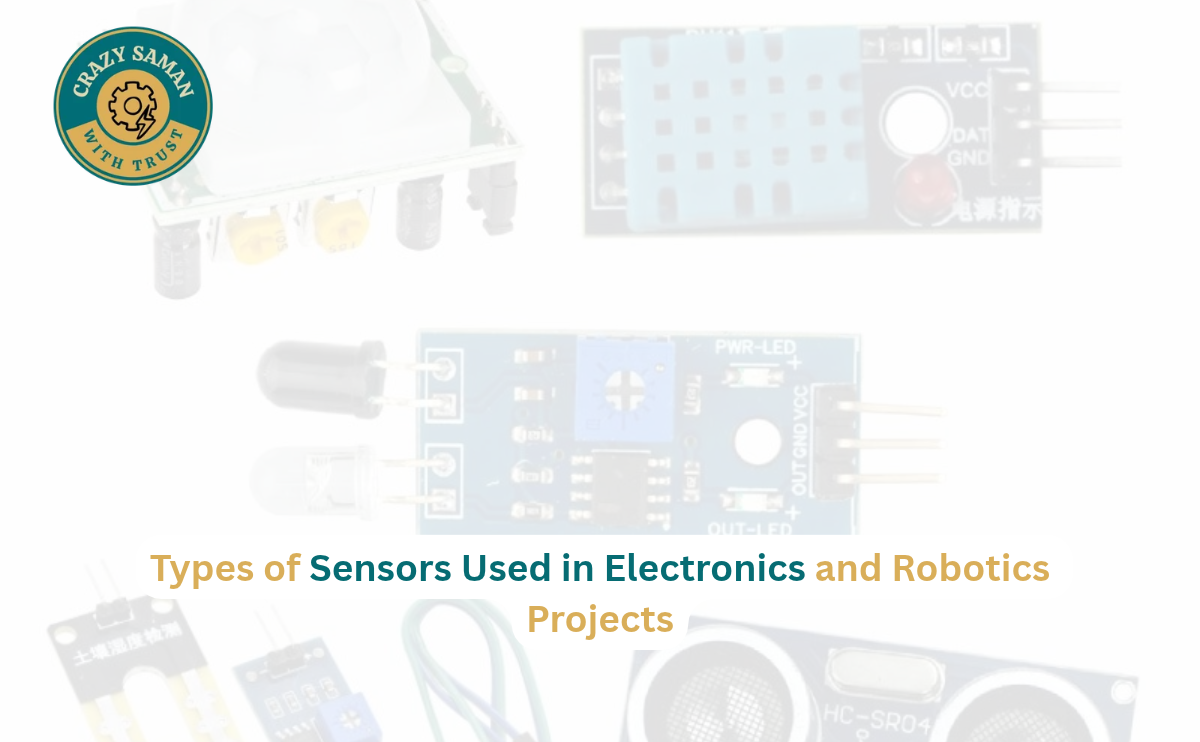
The main types of electronic sensors are grouped by what they detect:
- Distance: ultrasonic and IR sensors
- Temperature and humidity: DHT11 and LM35
- Light: LDR and photodiode modules
- Motion: PIR sensor
- Flame and gas: flame sensor and MQ-series modules
- Water and rain: rain drop and soil moisture sensors
- Sound: sound detection module
Knowing these types of electronic sensors helps you match the right part to the right job. Most sensors for electronics projects fall into one of these groups.
Arduino Sensors List for Beginners and Students
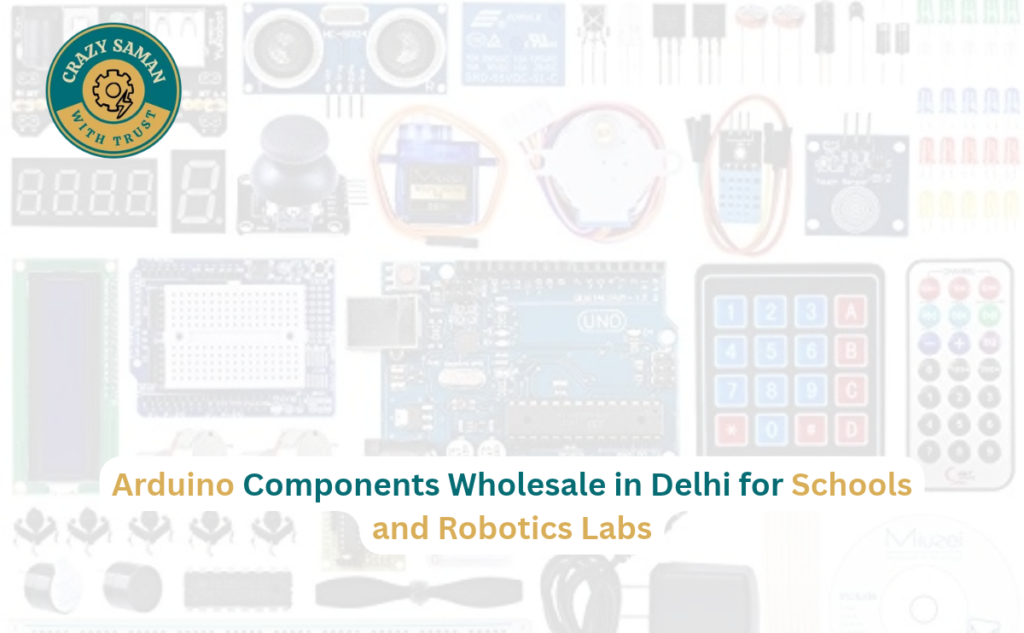
A simple Arduino sensors list for beginners starts with five parts: an ultrasonic sensor, an IR obstacle sensor, a DHT11, a PIR sensor and an LDR module. They are cheap, run on 5V and have plenty of free example code online. Once you are comfortable, add a flame sensor, soil moisture sensor or sound sensor to your Arduino sensors list. Starting small is the best way to pick sensors for electronics projects without wasting money.
Sensors for Robotics Projects and DIY Robots
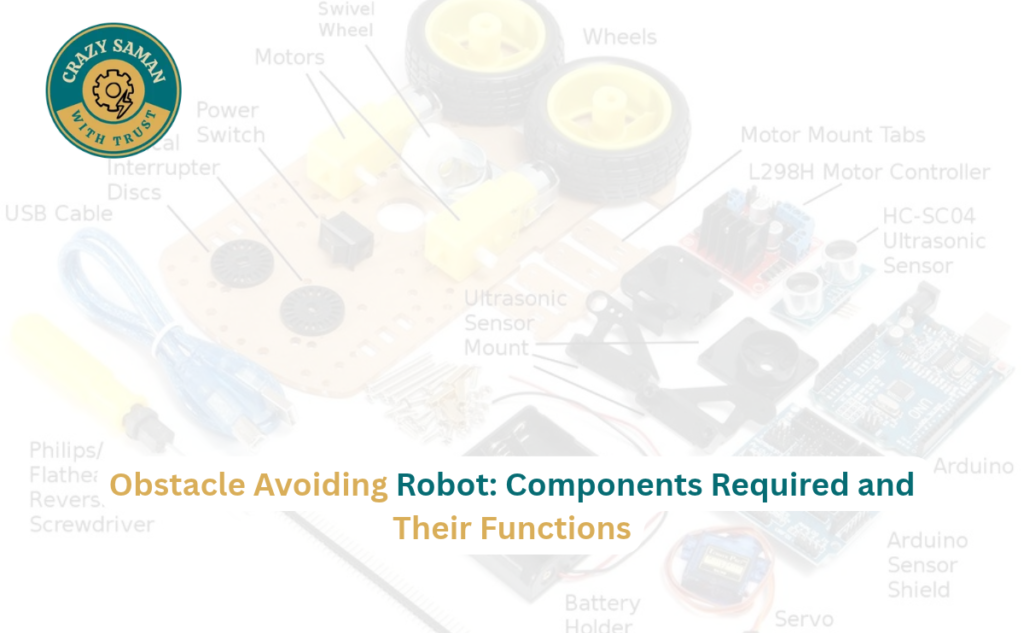
Robots need to see obstacles, follow lines and track their own movement. Common sensors for robotics projects include ultrasonic sensors for obstacle avoidance, IR sensors for line following, and encoder or gyro modules for tracking motion. A simple robot car can work well with just two or three sensors. Good sensors for robotics projects are accurate, easy to mount and run at the same voltage as your board. Many sensors for electronics projects double as robot sensors, so one purchase can serve both.
Ultrasonic Sensor Uses in Electronics and Robotics
The HC-SR04 is one of the most loved sensors for electronics projects. It sends out sound waves and measures how long the echo takes to return, giving distance from about 2 cm to 4 m. Popular ultrasonic sensor uses include obstacle-avoiding robots, parking distance meters, water tank level indicators and automatic dustbins. Point it at a flat surface, because soft or angled objects can give wrong readings.
IR Sensor for School Projects and Object Detection
An IR sensor has an infrared LED and a receiver. When an object comes near, the light bounces back and the module sends a signal. That makes an IR sensor for school projects a great choice for object counters, line-following robots, automatic doors and touchless switches. It is cheap and simple, though bright sunlight can disturb it, so test indoors first. Among all sensors for electronics projects, it is probably the easiest first step.
Temperature and Humidity Sensors for Electronic Projects
The DHT11 measures both temperature and humidity and is a favourite for weather stations and room monitors. The LM35 gives temperature only but is very easy to read. Pair either one with a small LCD and you can have a working model in an afternoon. These sensors for electronics projects are especially popular at science exhibitions.
Motion and Proximity Sensors for Automation Projects
A PIR sensor detects the body heat of a moving person, so it suits automatic lights, door alarms and fan control. Proximity sensors detect nearby objects without touching them and work well in counters and conveyor models. Add a relay module and you can switch real appliances on or off using these sensors for electronics projects.
How to Choose the Right Sensor for Your Electronics Project
Ask a few simple questions before you buy:
- What do I want to measure?
- Does it work at 3.3V or 5V, the same as my board?
- Is the output digital or analog?
- Is sample code easily available?
Also check the range and accuracy in the specifications. Choosing sensors for electronics projects with these checks avoids most beginner mistakes. Buy one spare as well, because a sensor can burn out quickly with wrong wiring.
Best Sensors for School Science and Robotics Projects
For quick school wins, try these combinations: an ultrasonic sensor for a distance meter, an IR sensor for an object counter, a DHT11 for a weather station, a rain drop sensor for a rain alert and a flame sensor for a fire alarm. For robots, combine ultrasonic and IR sensors with a motor driver and DC motors. These are the best sensors for electronics projects when marks, budget and time all matter.
Buy Sensors for Electronics Projects Online from CRAZY SAMAN
Looking for sensors for electronics projects and other parts for school work? CRAZY SAMAN offers Arduino boards, sensors, DC motors, jumper wires breadboards, and electronic modules for school projects, science exhibitions, robotics and DIY experiments. Customers near Sultanpuri, Delhi can ask about local delivery through Porter, subject to availability and delivery charges. You can also call us first to confirm stock and collect from our location. We try to keep prices competitive so students, parents and teachers can find parts within budget, and you are free to compare with Amazon, Flipkart and Meesho before buying. Browse our products online, check specifications and contact CRAZY SAMAN to discuss your project requirements, bulk orders, pricing and delivery.
Frequently Asked Questions About Sensors for Electronics Projects
Which sensor is best for beginners?
Ultrasonic, IR and DHT11 are the easiest to start with. Most sensors for electronics projects use simple three-pin wiring and come with ready example code.
What is the difference between IR and ultrasonic sensors?
An IR sensor is cheaper and works at short range, but sunlight can affect it. An ultrasonic sensor has a longer range and is not bothered by the colour of the object.
Can I use a sensor without Arduino?
Some modules with a built-in comparator can drive an LED or relay directly, but most sensors for electronics projects need a microcontroller to be truly useful.
Is it safe to buy sensors online?
Yes, if the seller lists clear specifications. Always buy sensors for electronics projects from a source that shows voltage, range and pin details.
📦 Order Your Components Today
Crazy Saman — Delhi’s Best Electronic Components Store
🌐 Website: crazysaman.com 📞 Call / WhatsApp: 9289245581 📍 Location: Delhi, India — Pan-India Delivery Available ⏰ Business Hours: Monday to Saturday | 10:00 AM – 7:00 PM