

A relay module is one of the most useful parts in electronics, yet beginners often wonder what it actually does. In simple words, it lets a small signal control a big load. This guide explains relay module uses, how the board works and how to pick the right type, so your next project is safer and easier.
What Is a Relay Module and How Does It Work?
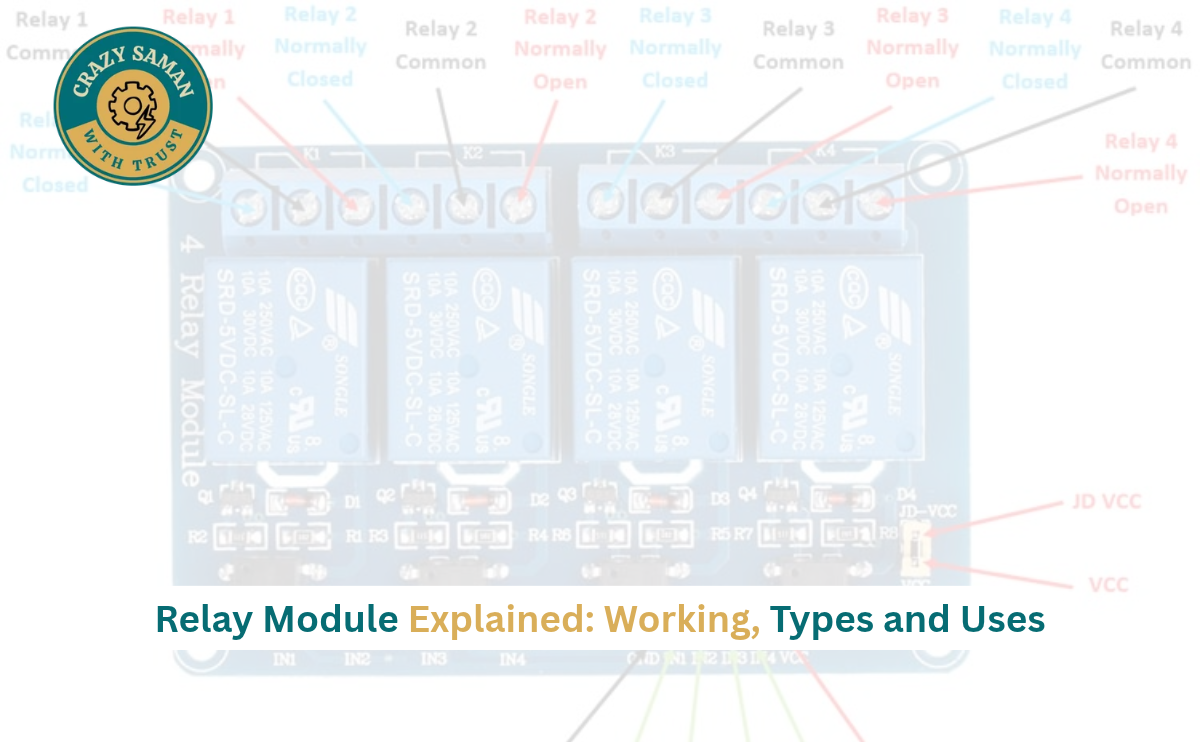
A relay module is a small board built around an electromagnetic relay, with a transistor driver, a diode and an LED indicator. When a 5V signal turns the coil on, an internal switch moves and connects or disconnects a separate circuit. Because the two circuits are isolated, a microcontroller can safely control appliances or high-current devices. Knowing this working principle makes all the relay module uses below easier to follow.
Common Relay Module Uses in Electronics and Automation
The most common relay module uses are switching lights, fans, pumps, motors and chargers from a low-voltage board. Students use them in school projects, and hobbyists use them to control 12V devices. Typical examples include:
- Switching bulbs, fans and appliances on or off
- Controlling water pumps and solenoid valves
- Running automatic gates, timers and alarms
- Building temperature or light-based controllers
Because relay module uses cover both small and large loads, it is a favourite part in beginner kits.
How to Use an Arduino Relay Module in Projects
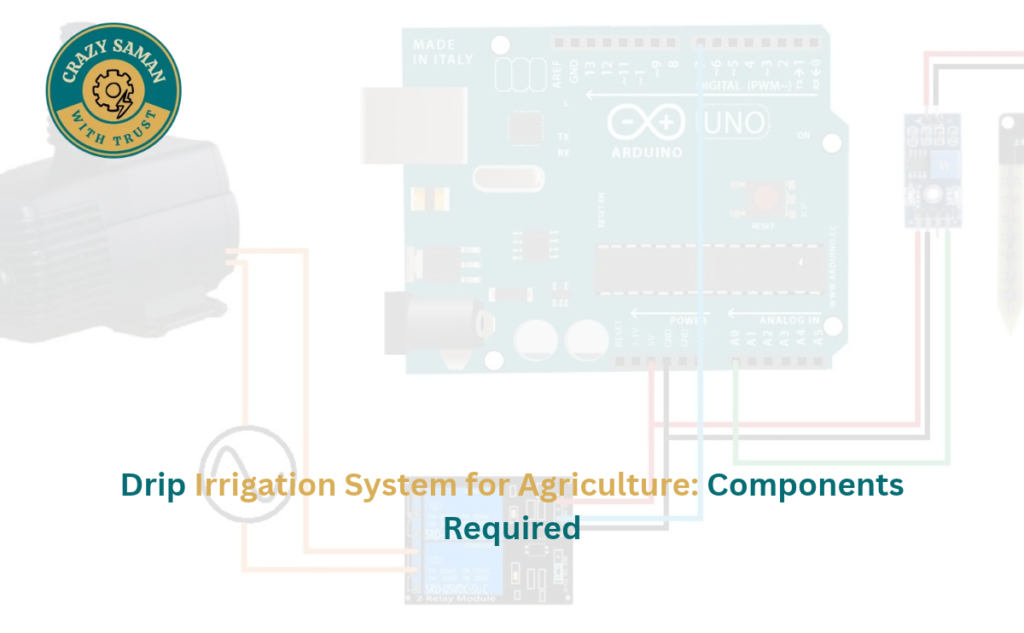
An Arduino relay module is easy to work with because one digital pin is enough to switch it. Set the pin as output, write HIGH or LOW, and the relay clicks. Most boards are active-low, so check yours before testing. Start with a small lamp or LED strip, then add a sensor later. Popular relay module uses with Arduino include a plant watering system, a motion-activated light and a temperature-controlled fan. Any Arduino relay module can also be paired with ESP boards.
1 Channel Relay Module: Working and Applications
A 1 channel relay module has a single relay, so it controls one device. It has three load terminals: COM, NO and NC. Connect the load between COM and NO if you want it off by default. This simple design makes it the most popular choice for lamps, door locks and basic relay module uses where only one appliance needs control. It is also cheap and compact.
2 Channel Relay Module: Features and Uses
A 2 channel relay module carries two independent relays on one board, each with its own input pin. You can control two devices separately, such as a light and a fan, or run a small motor in both directions with the right wiring. It saves space compared with two separate boards, and many relay module uses in small setups need exactly this.
Relay Board for Projects: How to Choose the Right One
A good relay board for projects should match your coil voltage, usually 5V or 12V, and the load rating printed on the relay. Look for optocoupler isolation, status LEDs and clear screw terminals. Always keep the load within the rated current. For beginners, a relay board for projects with an indicator LED makes testing much easier. Before buying, list your planned relay module uses and add up the load.
Relay Module for Automation: Applications and Benefits
A relay module for automation lets a small controller manage bigger electrical devices safely. In home projects it can handle lighting schedules, water tanks and fans. Its benefits are isolation, low cost, easy wiring and wide compatibility with Arduino and sensors. Timers and sensor-triggered switches are strong relay module uses in DIY smart systems, and a relay module for automation also works well in science exhibition models.
How to Connect a Relay Module to an Arduino Board
Connect VCC to 5V, GND to GND and IN to a digital pin such as D7. On the output side, wire your load between COM and NO, with the power source in series. Switch off power while wiring. For mains loads, use proper insulation and take help from an adult or electrician, because safety matters more than any of the relay module uses you plan.
Difference Between 1 Channel and 2 Channel Relay Modules
The main difference is the number of relays. One channel controls one device, while two channels control two. A single-relay board costs less and suits simple tasks, whereas the dual board suits projects with more outputs. The working is identical, so pick based on how many loads you have. Comparing relay module uses in your plan will quickly show which one you need.
How to Choose a Relay Module for Your Electronics Project
Check the coil voltage, contact rating, trigger type (high or low), channel count and optocoupler isolation. Buy from a trusted shop so the relay is genuine and the markings are clear. Matching the specs to your relay module uses avoids burnt contacts and unstable behaviour. If you are unsure, start with a 5V board with one or two channels.
Buy Relay Modules for Electronics Projects from CRAZY SAMAN
Looking for relay modules and other parts for your project? CRAZY SAMAN offers electronic components including Arduino boards, relay modules, sensors, jumper wires, breadboards, DC motors and electronic modules for school projects, science exhibitions, robotics and DIY experiments. Customers in nearby areas of Sultanpuri, Delhi can ask about local delivery through Porter, subject to availability and delivery charges. You can also call in advance to confirm stock and arrange collection from our location.
We aim to keep prices competitive, so students, parents, teachers and hobbyists can find suitable products within budget. You are welcome to compare our prices with Amazon, Flipkart, Meesho and other platforms. Browse our products online, check specifications and contact CRAZY SAMAN to discuss your requirements, bulk orders, pricing and delivery. Tell us your planned relay module uses, and we can help you pick a suitable board.
Frequently Asked Questions About Relay Modules
What are the main relay module uses?
Switching lights, fans, pumps and motors from low-voltage boards like Arduino.
Can an Arduino relay module control mains appliances?
Yes, if the relay rating is higher than the load and the wiring is done safely.
Should I buy one or two channels?
For most simple relay module uses, a 1 channel relay module is enough. Choose a 2 channel relay module when you need two separate outputs.
Which voltage is common?
5V boards are the most common in beginner projects.
📦 Order Your Components Today
Crazy Saman — Delhi’s Best Electronic Components Store
🌐 Website: crazysaman.com 📞 Call / WhatsApp: 9289245581 📍 Location: Delhi, India — Pan-India Delivery Available ⏰ Business Hours: Monday to Saturday | 10:00 AM – 7:00 PM